10+ Chinese Gate Designs for Modern Mountain Homes
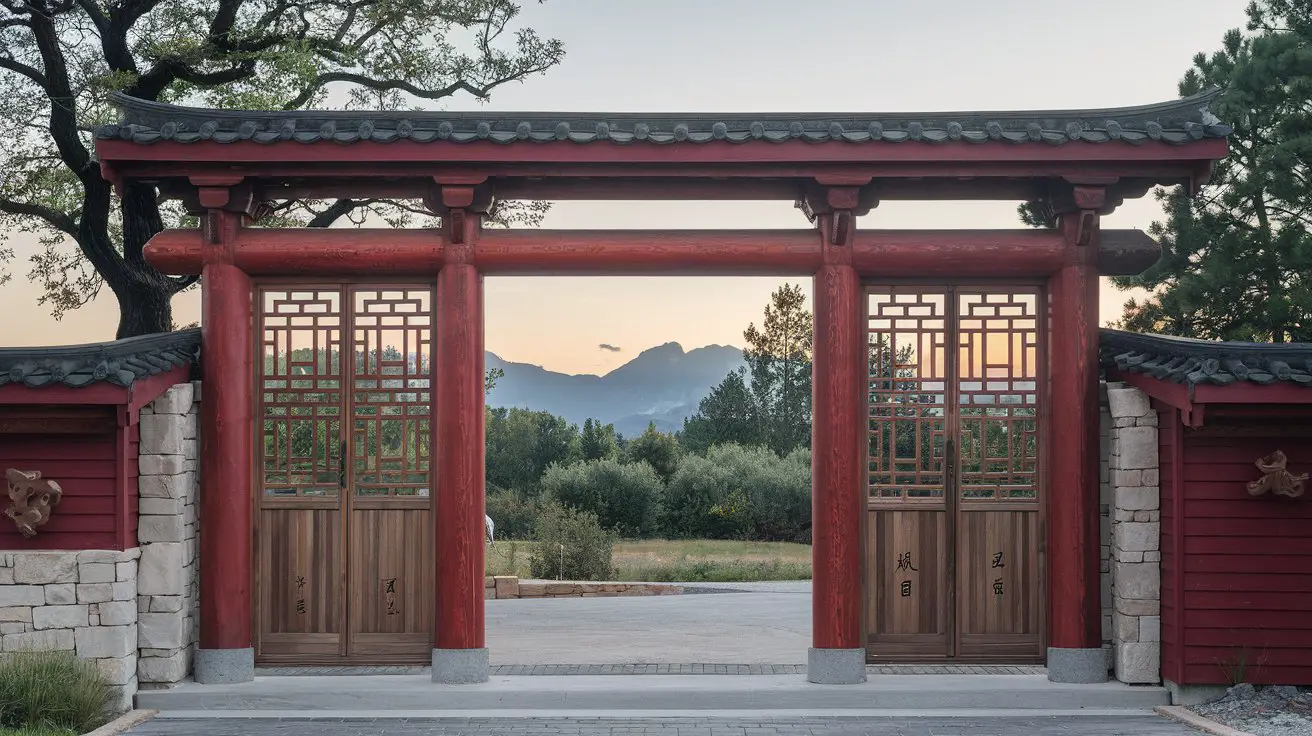
There’s something about a mountain home that just begs for a dramatic entrance. You know the kind—clean modern lines, a bit of timber and stone, and that soft crunch of gravel underfoot when someone walks up. But here’s the thing no one talks about much: gates. Especially main gates. Half the time they’re a weird afterthought, like someone googled “metal gate” at the last second and clicked the cheapest option.
I used to think a gate didn’t really matter. Then I spent a summer filming courtyards in southwest China—places where the gate wasn’t just the start of the property, it was the start of the story. Some were bold like dragon spines. Others, so quiet you almost missed them tucked between pine and rock.
That’s when it hit me: in a modern mountain home—whether it’s a sleek forest cabin or a lakeside barndominium—the right gate can set the tone. You’re not just marking a boundary. You’re creating a feeling.
So here’s a lineup of Chinese gate designs that blend tradition with clean, modern energy. Some are strong and sculptural. Others are subtle and serene. But all of them? Definitely more oriental than your standard welded rectangle.
1. Asymmetrical Gate with Offset Entry Path
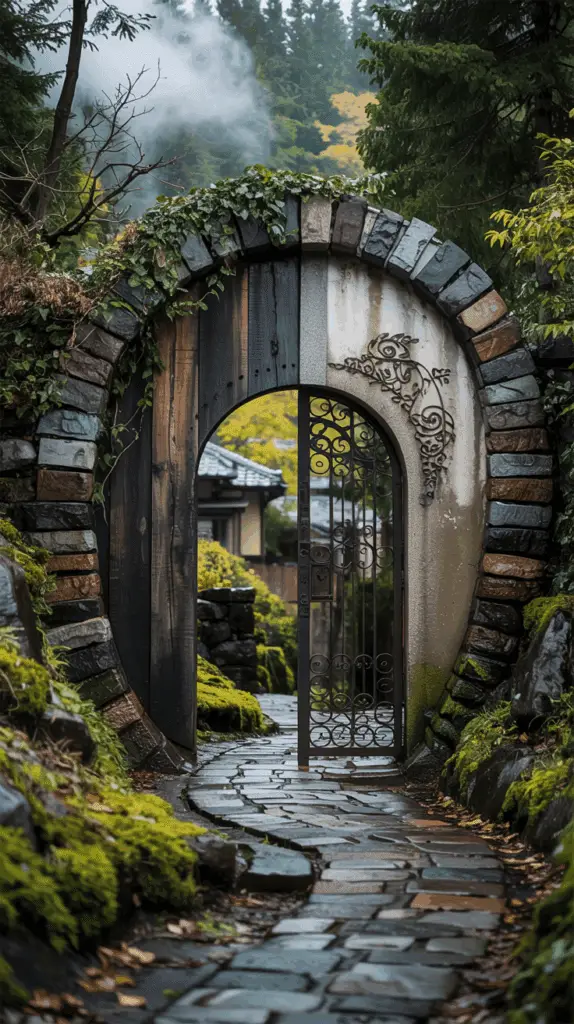
Sometimes the most interesting entryways are the ones that don’t line up perfectly. This design places the gate slightly off-center—maybe at an angle to the house or the driveway—and uses asymmetry to create movement.
One side might be solid wood, the other open metal. Or one panel might be taller than the other. Pair that with a winding path or steps that don’t go straight to the door, and suddenly your mountain house feels like part of a story, not just a structure.
This style pulls a bit from traditional Chinese garden logic—where nothing’s quite centered, but everything’s balanced. If your home sits on a slope or has unusual angles, this kind of gate can make the whole thing feel like it fits.
2. A Dragon Spine Gate for the Bold Modernist
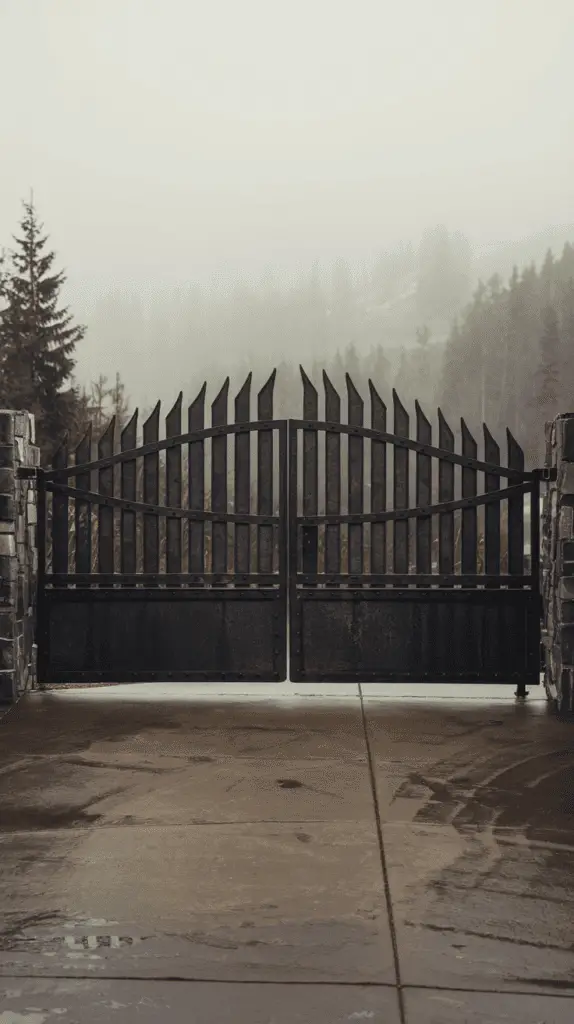
Not for the faint of heart, but definitely unforgettable. This gate style takes visual cues from traditional dragon motifs—think strong, ridged, almost armor-like metal panels—but reworks them into something sleek and contemporary. Imagine matte black aluminum or weathered Corten steel, with irregular vertical slats that mimic the rise and fall of a dragon’s back.
It’s a statement piece. Works best on homes with strong geometry—like a modern barn house or a mountain home with stacked stone walls. Set this against a simple driveway and minimalist landscaping to let the design breathe.
Don’t go too literal with dragon imagery. This isn’t a theme park gate. Just take the energy of the dragon—powerful, protective, a little mysterious—and filter it through modern design thinking. The result? Something sculptural, grounded, and totally mountain-worthy.
3. Floating Courtyard Screens as an Entry Gate
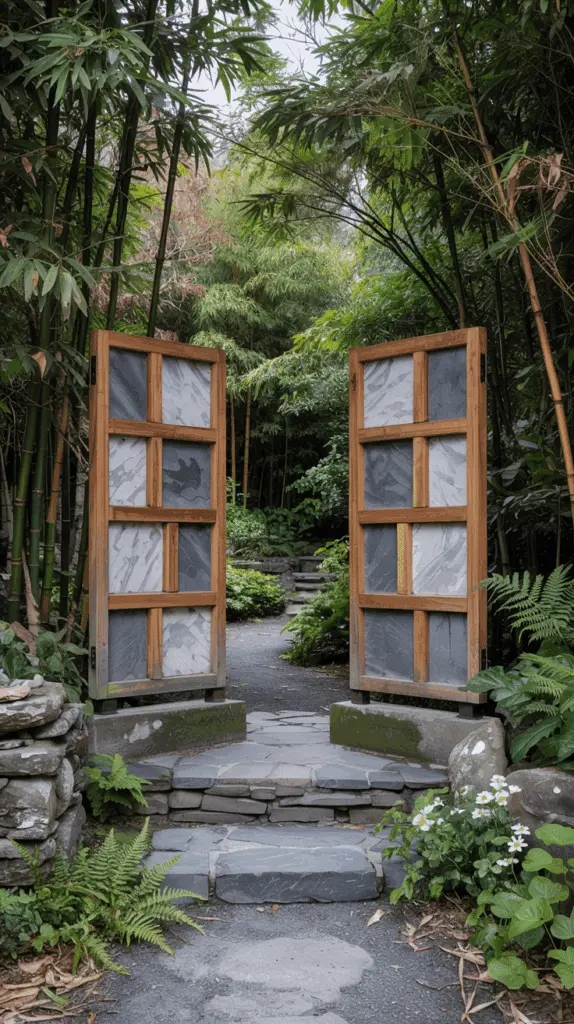
For homes that sit low into the land—think forest cabins or contemporary lake houses—a gate that disappears a little can be surprisingly powerful. This idea takes from Chinese courtyard screens, traditionally used inside walled gardens to divide space. Here, we bring it out front.
Imagine two staggered wood or stone screen panels—maybe one solid, one slatted—placed just off the path that leads to your main entrance. They don’t fully block the view, but they shape it. The gate itself might be hidden between them, or the panels are the gate—just with a subtle opening between them.
This setup works well with a gravel path and native plants. Add a shallow step or stone plinth underneath to lift the panels slightly off the ground—it’ll feel less like fencing and more like sculpture. Quietly architectural, but still welcoming.
4. A Steel Frame Gate with Bamboo Inlay
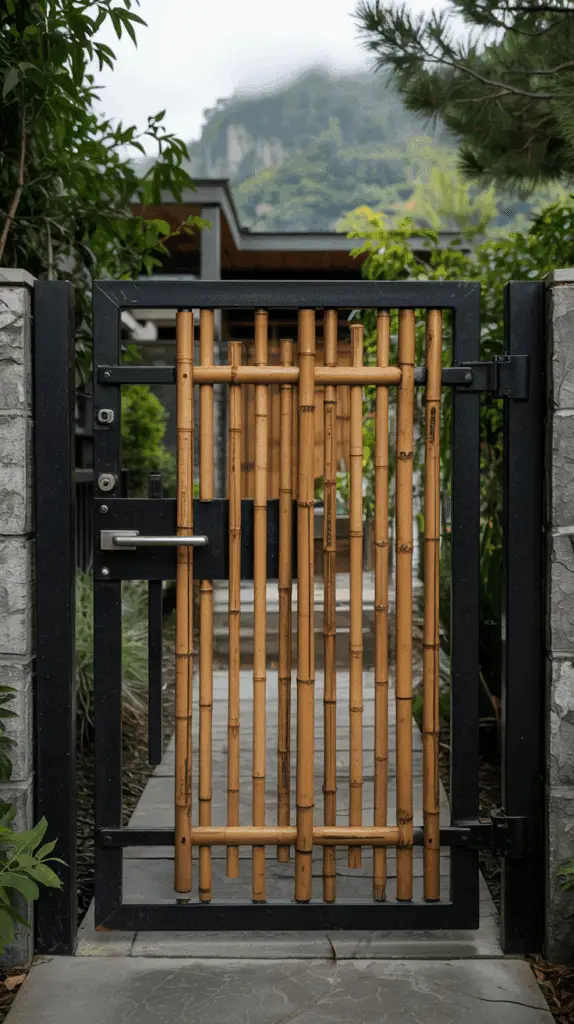
This one’s for modern mountain homes that like a bit of texture. Think black powder-coated steel framing a center panel made from compressed bamboo, or even vertical bamboo rods held in tension. It’s an unexpected pairing—industrial edge meets organic detail—and it works beautifully in homes that blend timber with concrete or metal.
The key here is to let the bamboo be a texture, not a gimmick. You want to see the grain, the warm tones, maybe even a few imperfections. Frame it cleanly and pair it with minimalist hardware—like a slim handle and concealed hinges.
Bonus: bamboo weathers beautifully, and if you treat it right, it’ll go soft grey over time. Which, let’s be honest, looks even better next to stone driveways and rusty mountain soil.
5. Sliding Slat Gate with Mountain Shadows
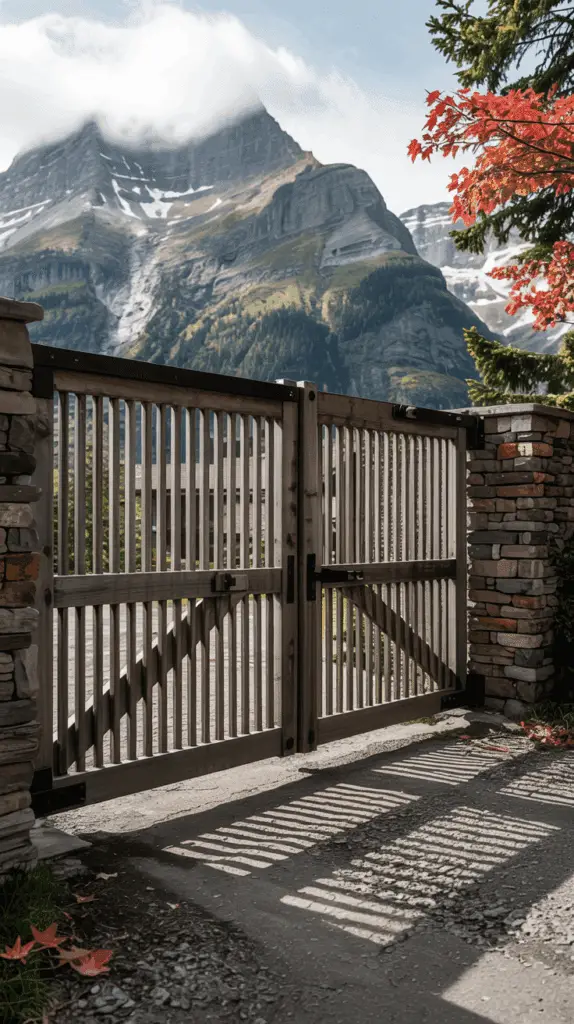
Modern homes love a sliding gate—and for good reason. They’re practical on tight mountain lots and they don’t swing out awkwardly into gravel paths. This design takes a modern sliding mechanism and pairs it with wooden slats in varied widths, casting striped shadows across the ground at different times of day.
Inspired by mountain homes in Yunnan, where slatted shade screens are used everywhere, this gate feels functional and poetic at once. Choose dark wood if your exterior is light, or go pale oak or cedar if your siding’s more charcoal or stone.
Mount the gate so it disappears behind a wall or hedge when open—it’ll feel lighter, more integrated. And don’t overdo the slats. A little rhythm goes a long way.
6. Courtyard Gate with Stone Pillars and Timber Lintel
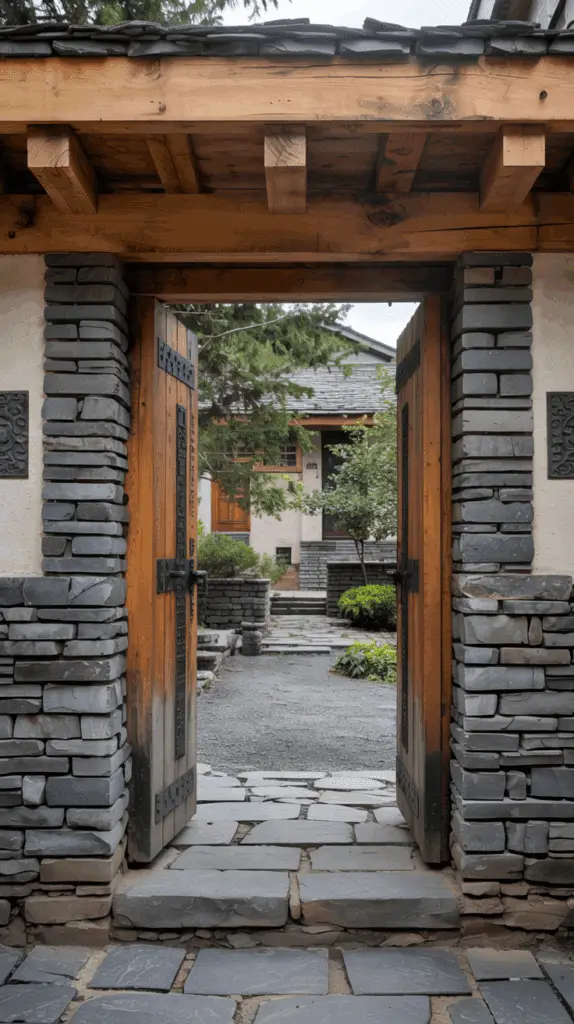
This one’s got some real presence. It blends that heavy mountain-home vibe—lots of stone, timber, maybe even a bit of moss—with classic Chinese courtyard structure. Picture two thick stone columns (think stacked slate or river rock), holding up a simple timber crossbeam as the gate’s lintel.
There doesn’t even need to be a swinging gate here. It can just be an open frame. What matters is the weight of the materials and how they feel as you walk through. If you’ve got a gravel path winding up to your house, this makes the whole thing feel intentional, like it’s guiding you inward.
Works beautifully if your house has a bit of that barndominium-meets-lodge energy. And if you live somewhere with a real winter? The stone holds snow like it was made for it.
7. Twin Panel Entry Gate with Frosted Glass and Wood
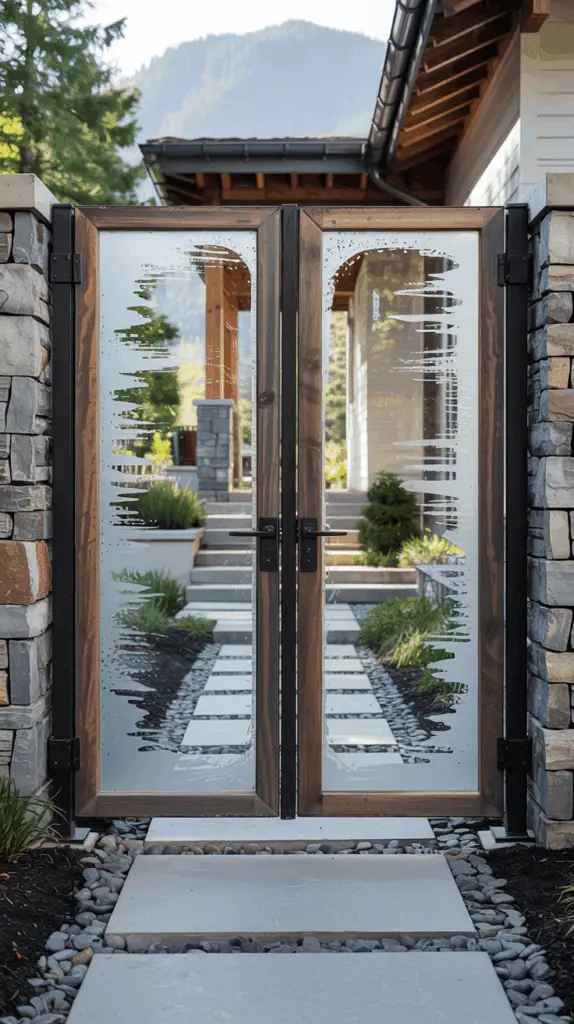
For mountain homes that lean more mid-century or contemporary, this one’s got just the right amount of polish. Two tall panels—framed in metal or dark wood—with frosted or etched glass insets that give a glimpse of what’s beyond without fully showing the home. A bit mysterious, in a good way.
The trick here is balance. The gate should be simple, not showy. Maybe you etch a subtle mountain line or a few vertical brush-style strokes into the glass. That’s it. Let the materials do the work.
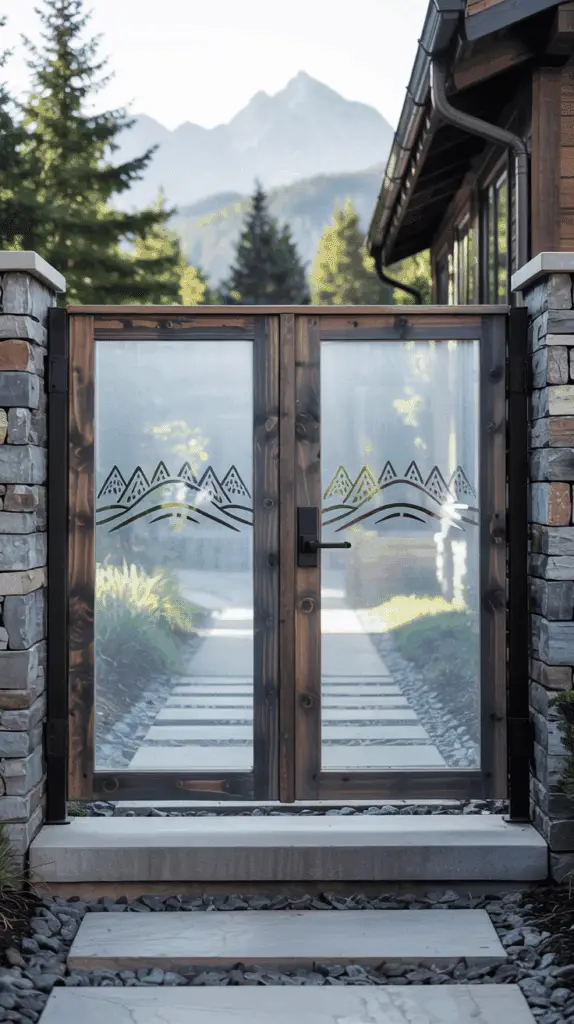
Best paired with clean landscaping—gravel, simple stone steps, no clutter. The frosted glass gives you that layered, misty look, which weirdly works even better on rainy days. It also reflects morning light like nothing else.
8. Japanese-Style Split Gate with Low Fence Lines
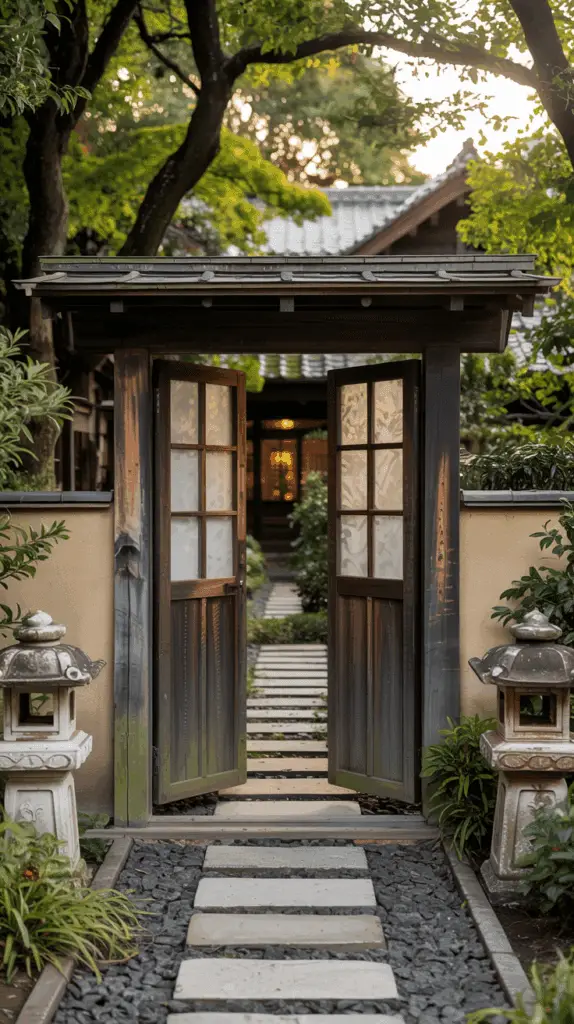
This one borrows from Japanese garden gates, where the gate feels more like a suggestion than a barrier. A split design—two half-height wooden gates that open in the middle—sits within a low fence line, usually no taller than waist height.
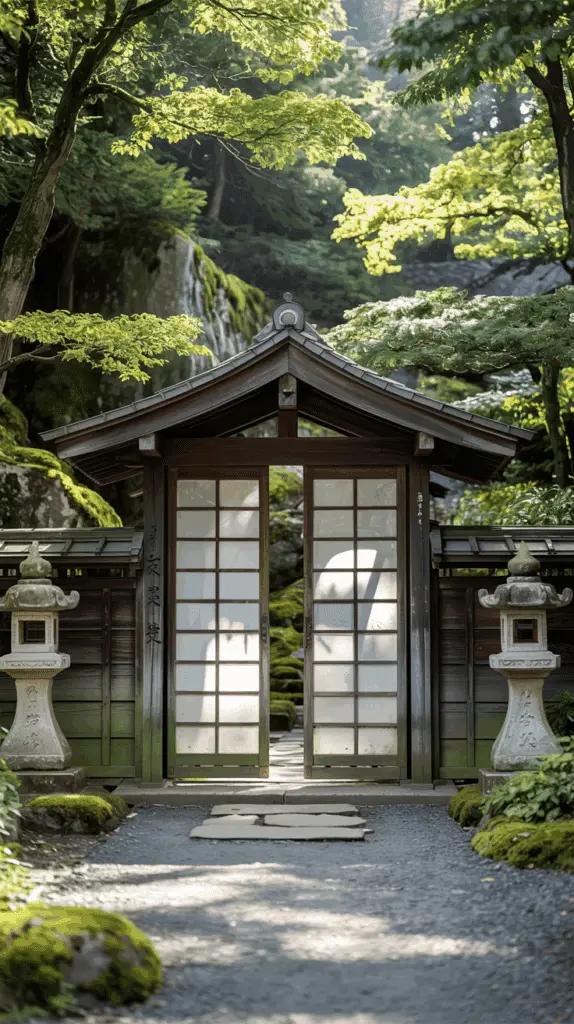
You walk through, and it almost feels like a bow. It’s humble, but very intentional. And for mountain homes with open sightlines or wide yards, this kind of entry makes the most sense. It doesn’t block your views, but it still says “this space is something.”
Use dark stained wood, or go raw and let it weather. Add small stone lanterns on either side if you want to lean into the look, or keep it plain and let the shape speak for itself.
9. Curved Roof Gate Inspired by Dragon Gate Design
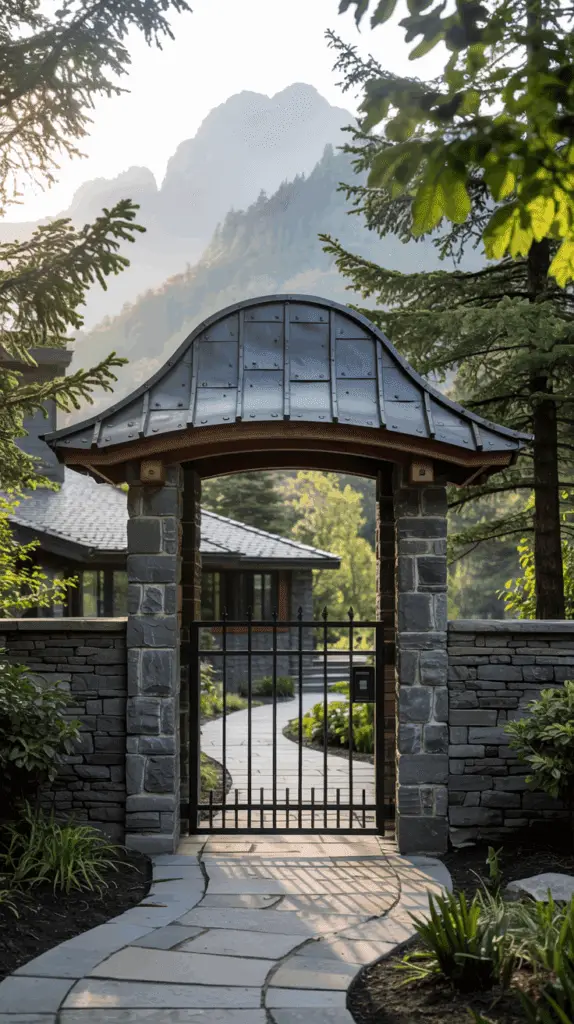
Here’s where things start getting fun. If your mountain house is on the bolder side—maybe it’s got big beams, copper flashing, that kind of thing—this curved roof gate adds a beautiful sculptural moment right up front.
Inspired by traditional dragon gates but pared back for a modern setting, this gate features two sturdy pillars with a curved canopy overhead. The roof might be wood or metal, depending on your exterior. It’s not flashy—it’s just got a little extra curve where you weren’t expecting one.
You can leave the space underneath open, or hang a minimalist gate panel beneath it in black steel or stained wood. Either way, it creates a soft transition from outside world to mountain calm. I saw one like this in a tea farm outside Chengdu, and it’s stuck with me ever since.
10. A Minimal Wooden Frame Gate with Torii Influence
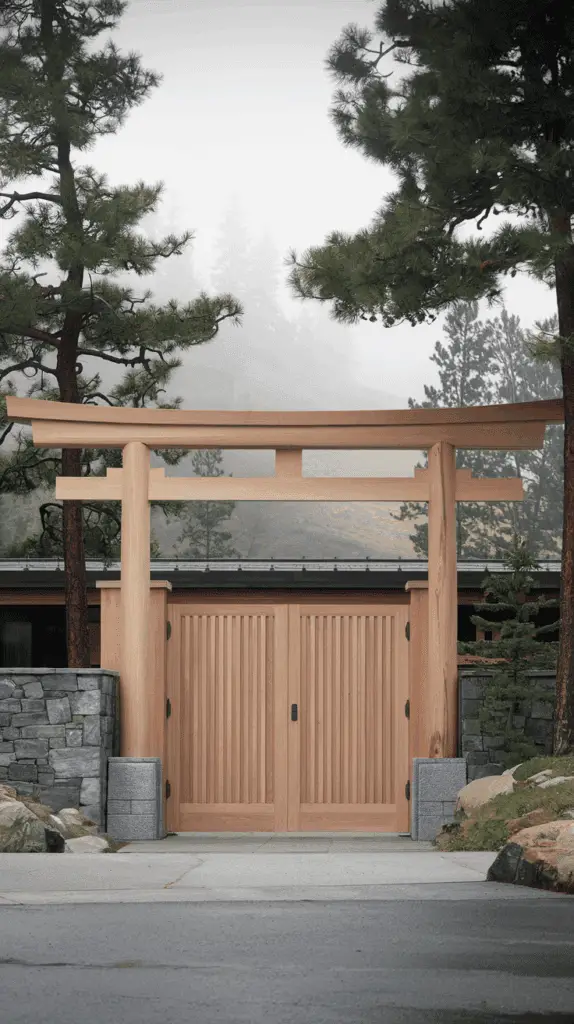
Ok, this isn’t quite Chinese, but theres a lot of similarities between the Torii gate and Chinese gate design. If your modern mountain home leans towards Scandi-zen, this is the one to look at first. Inspired by the clean lines of a traditional Torii gate, this design uses two vertical posts and a simple horizontal beam—no curved flourishes, no ornate carvings. Just calm, balanced proportions in natural wood.
I saw a version of this outside a cabin in Lijiang. It wasn’t trying to impress—it just belonged there, like it had grown out of the hillside. You can pull this off with cedar, pine, or even charred wood if you want a moody blackened look. And yes, it works without a fence—it just quietly says, “you’ve arrived.”
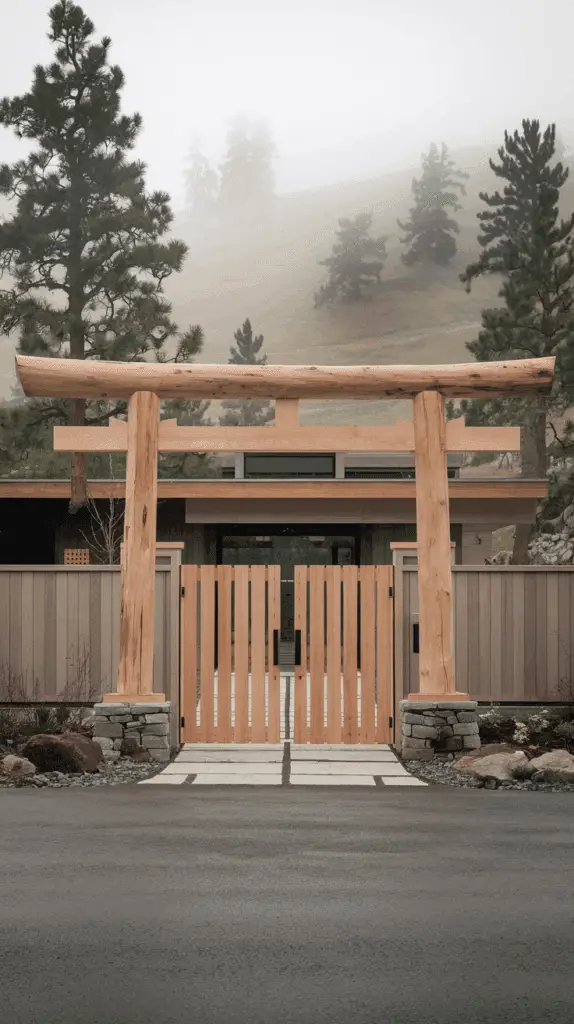
To keep it feeling more architectural than rustic, use square beams with sharp edges, and space things out so there’s air and light between the frame and any nearby shrubs or rocks. Bonus if you light it from below at night.
Final Thoughts
Gates don’t always get the credit they deserve. But when you’re building or shaping a home—especially one tucked into trees, or perched near a lake or hillside—they matter more than you think. They say something before anyone even knocks.
What I love about using Chinese and East Asian design as a base is how much intention goes into each element. Gates aren’t just barriers. They’re frames. Markers of rhythm. Places where the mood changes. That works just as well in a contemporary mountain home as it does in a courtyard in Yunnan.
So whether you’re working with steel and stone or bamboo and cedar, the goal’s not to copy—it’s to blend. Take what speaks to you and let it mix with your terrain, your style, your story.
And even if your gate ends up being more of a garden arch than a grand entry, if it makes you pause for half a second before stepping inside, I’d say that’s a pretty good start.