Do People Still Use Cash in China?
It’s one of the first things people ask when they’re planning a trip or moving to China:
“Do people still use cash?”
The short answer is: yes — but barely.
In most Chinese cities, cash feels like a relic. If you walk into a noodle shop with a fistful of bills, you might be met with confusion, or even a polite “Do you have Alipay?” instead. Whether you’re buying fruit from a street cart or paying your utility bill, QR code payments rule everything. That shift can be shocking at first, especially if you’re new, just visiting, or don’t have access to a Chinese bank account (yet).
Still, cash isn’t entirely dead — and in the case of your phone stopping working, it can be a lifesaver!. My phone broke once and it was a challenging few days. I also left it in a taxi once and colleagues at the school I worked in had to do everything for me until we tracked down my phone.
My Experience Using Cash (or Trying To) in China
When I first visited China in 2018, I had always lived in the UK and used cash and bank cards for payments. I brought some cash to China but quickly noticed QR codes were much easier to use. I had no idea what I was doing with the Chinese apps and at this time I didn’t have a Chinese bank account and couldn’t link a UK card to them.
Instead my girl-friend would make payments on her phone and when needed I’d take out some cash from a bank or ATM and give it to her.
Once I got a bank account sorted, life was much easier. I’ve now been using my phone to pay for everything in China for several years and I love it. When I return home to the UK it’s strange using cards and cash again and much less convenient. I visited Tokyo last year and using cash there was pretty inconvenient. QR codes is definitely the way forward.
How QR Codes Took Over Daily Life
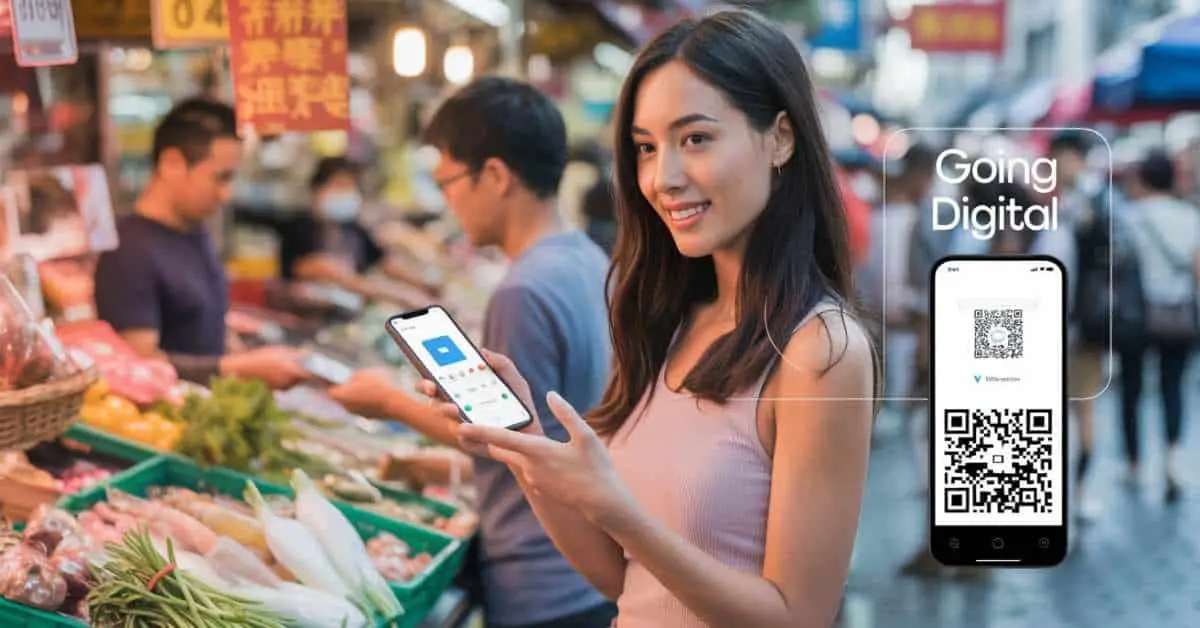
By now, it’s no exaggeration to say that China is the world leader in cashless payments. What started as a few apps to top up phone credit has evolved into a society where scanning a QR code is second nature — whether you’re buying breakfast, unlocking a shared bike, or tipping a street performer QR codes are everything here.
🟢 The Big Two: Alipay and WeChat Pay
These two apps dominate everyday transactions:
| Platform | What It’s Used For |
|---|---|
| Alipay | Online shopping, bills, metro cards, taxis, doctor appointments |
| WeChat Pay | Everything from rent to red envelopes (hongbao), friends splitting bills, coffee, groceries |
They’re both fast, nearly universal, and seamlessly embedded into daily life. Even street food vendors and rural shops often accept QR code payments now — and many don’t keep any physical change at all. I personally prefer Alipay but its useful to have some money on both apps, sometimes I’ll come across a QR code for WeChat only and there isn’t an Alipay option.
📲 How It Works
- Each user has a personal QR code to receive money.
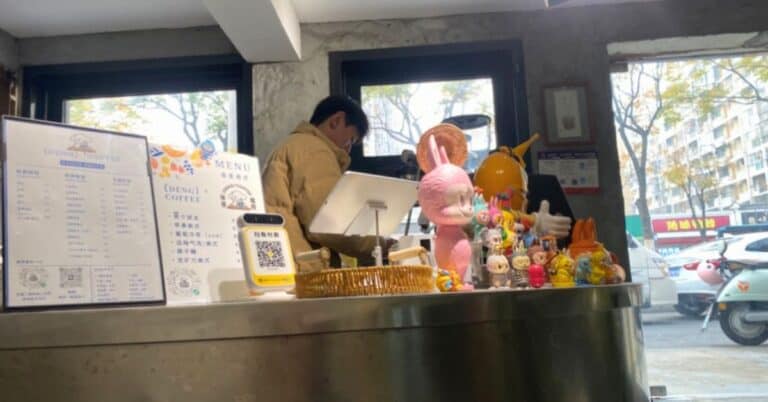
- Merchants display static QR codes you scan to pay them.
- All transactions are instant — no PIN, no fumbling, no coins.
Even buskers or beggars sometimes use printed QR codes laminated to cardboard. That’s how widespread it is.
Can Tourists or Newcomers Use Mobile Payments?
This used to be a big problem, because both Alipay and WeChat originally required:
- A Chinese bank account
- A Chinese phone number
- Real-name registration (via passport or ID)
But recently, China has opened up mobile payments to foreigners, including tourists. It’s still a bit clunky, but as long as you manage to link your bank card and your bank doesn’t block the foreign transactions, it works very fast.
✅ Alipay for Tourists
- You can now register with a foreign phone number and passport
- Link an international card (Visa, MasterCard, etc.)
- Use the “TourPass” feature — essentially a prepaid wallet, valid for 90 days
✅ WeChat Pay for Tourists
- Register using your passport + foreign phone number
- Link select international credit cards through WeChat
- Some functions are limited, but basic payments now work
💡 Note: Not all vendors accept international-linked accounts yet, so expect the occasional hiccup.
So Is Cash Still Used Anywhere?
Surprisingly — yes, but only in certain cases and generally by children or older people.
1. Small towns and rural areas
While even many remote villages now accept QR codes, a few old-school markets and mom-and-pop shops still take — and sometimes prefer — cash.
2. Government offices and hospitals
You may still need cash to:
- Pay minor admin fees
- Top up certain medical cards
- Use older vending machines or utility meters
That said, it’s rare for this to happen as almost all medical facilities, even if very rural areas, make use of QR codes.
3. When your phone dies
If your battery’s dead or your payment app crashes, having a 100 RMB note in your pocket can feel like magic. Even the rare place that doesn’t prefer cash will usually accept it as a last resort, although they might not always have change. I’ve had to use cash a few times and workers had to go into the back stock room to find cash to give me as change.
4. Taxis (sometimes)
Many taxis still accept cash — though it depends on the driver. These days, most prefer QR code payments through Didi, Meituan, or a built-in Alipay scanner.
Culture Shock: The Speed of It All
One of the biggest culture shocks for newcomers is how fast and frictionless mobile payments are.
- No waiting for change
- No PINs or card taps
- No awkward “minimum spend” rules
You just scan and go. Once you get used to it, trying to use cash again — especially back home — feels clumsy. It’s not just that QR codes are faster. It’s that they’ve been deeply integrated into the rhythm of daily life, from taxis to temple donations.
You might even notice your habits changing. Carrying a wallet starts to feel unnecessary. You memorize your QR codes. You reach for your phone instinctively at checkout. That’s when you realize — you’ve fully adapted.
A Few Tips for Newcomers
- ✅ Always carry at least 100 RMB, just in case
- ✅ Charge your phone every night (a dead phone is basically being broke)
- ✅ Use dual SIM if possible — Chinese number + foreign one
- ✅ Install both Alipay and WeChat Pay — some places only use one
Also consider carrying a small power bank if you’ll be out all day — especially if you’re relying on your phone for maps, translation, and payments all at once.
Final Thoughts
So, do people still use cash in China?
Technically yes. Practically? Almost never.
China has gone from a cash-first society to a fully digital one in less than a decade. What used to be a novelty — paying for a dumpling with your phone — is now so normal that many young people wouldn’t know where to get change if they had to.
For long-term residents, adapting to this system is easy. For tourists, it’s getting easier. And for everyone, it’s a glimpse into what cashless life might look like elsewhere — just more seamless, faster, and surprisingly natural once you’re in it.