Futuristic Architecture in Nanjing: Exploring the Nanjing Jumeirah Hotel & Poly Grand Theatre from Above.
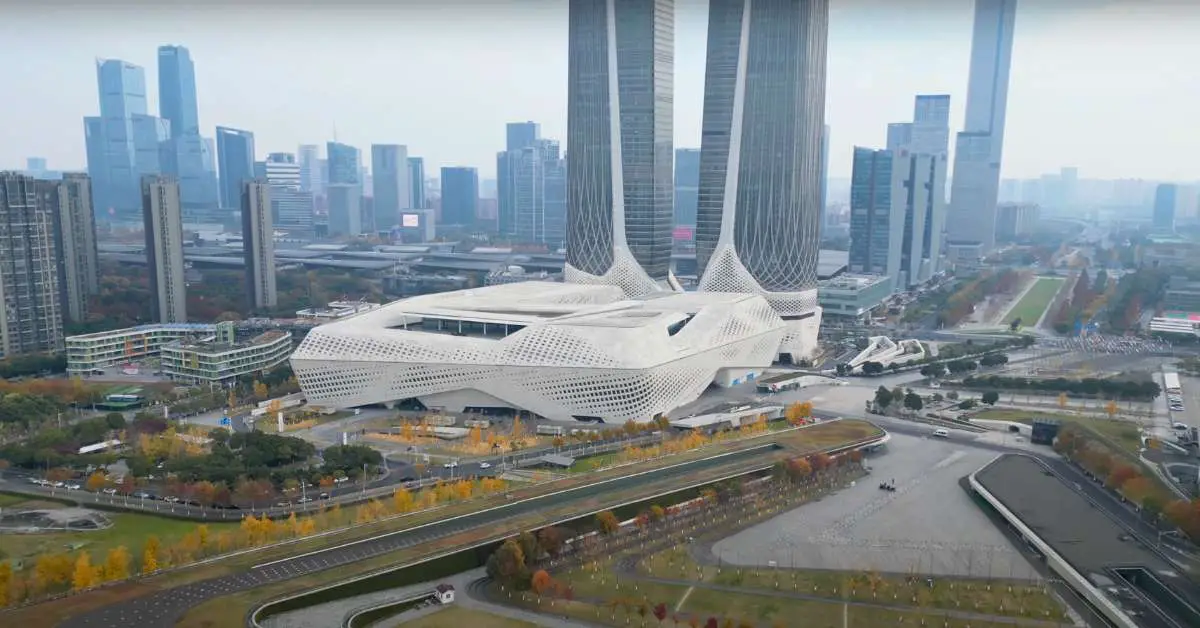
Flying my drone over the Yangtze River, with the Nanjing Eye Pedestrian Bridge framing the scene, I was captivated by the futuristic silhouette of the Jumeirah Nanjing Hotel and the Poly Grand Theatre (Later in this article I’ll attach a link to my drone footage video on YouTube). These architectural marvels, set against the vibrant hues of spring foliage, create a harmonious blend of modern design and natural beauty.
Jumeirah Nanjing Hotel: A Sail on the Yangtze
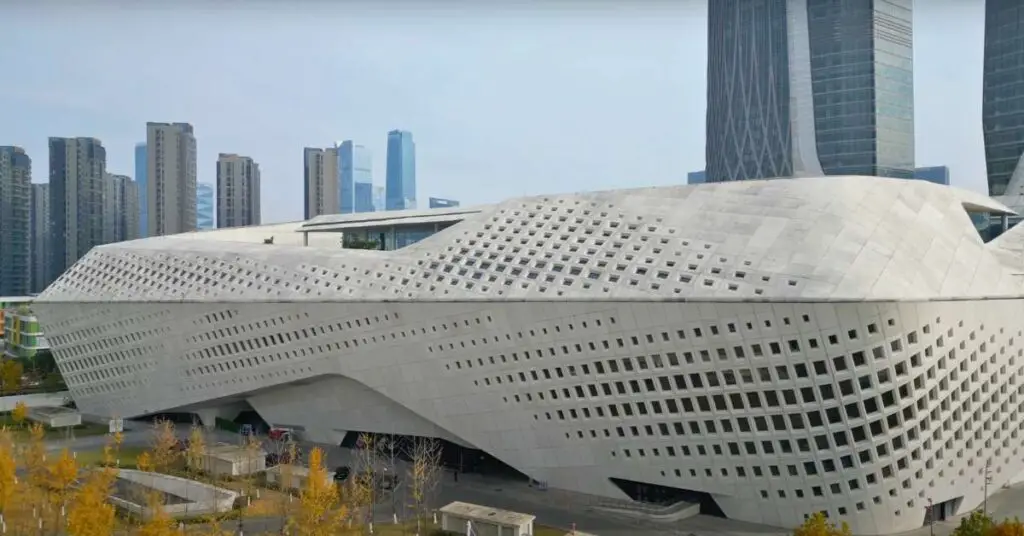
Designed by the legendary Zaha Hadid, the Jumeirah Nanjing Hotel rises gracefully above the city, its form inspired by the billowing sails of a ship—a nod to Nanjing’s rich maritime heritage.
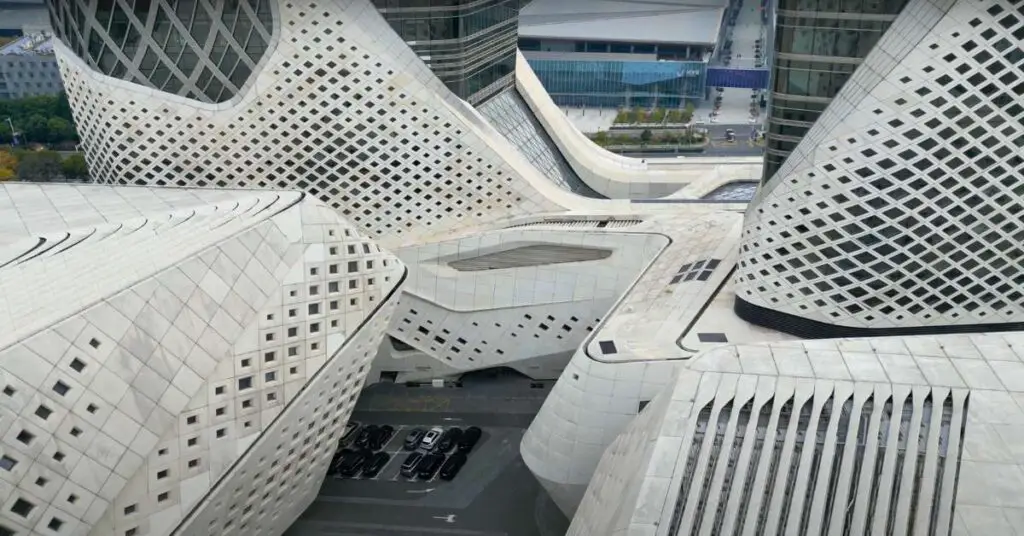
The hotel’s sleek curves and flowing lines are quintessential Hadid, embodying a sense of movement and fluidity. Occupying floors 39 through 67 of the north tower in the International Youth Cultural Centre, the hotel offers 261 rooms with panoramic views of the Yangtze River and the city skyline.
Poly Grand Theatre: A Symphony of Curves
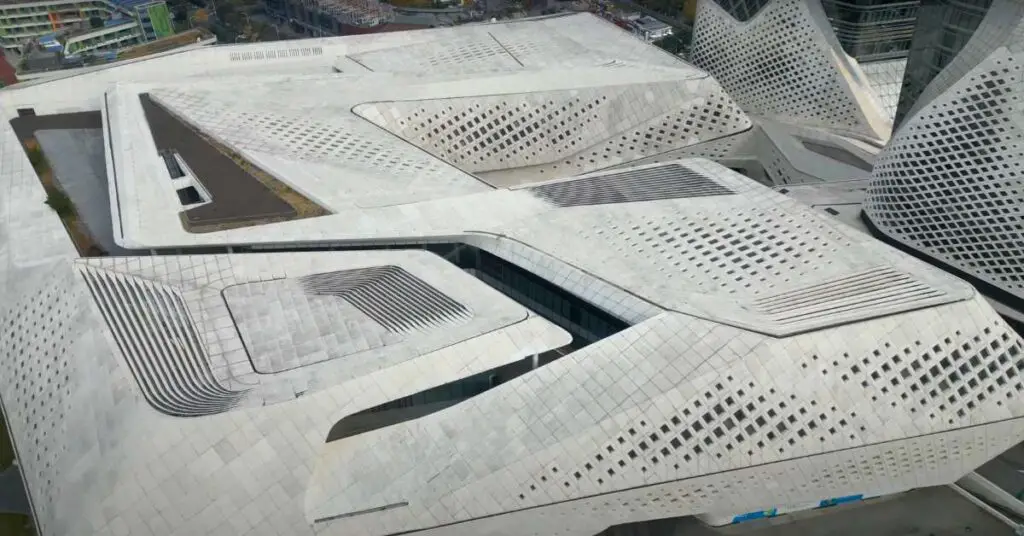
Adjacent to the hotel stands the Poly Grand Theatre, another masterpiece attributed to Zaha Hadid. The theatre’s design is a dynamic interplay of curves and edges, creating a sense of rhythm and harmony that resonates with its cultural purpose. The structure’s fluid form and innovative use of space make it a standout landmark in Nanjing’s architectural landscape.
Nature’s Palette in Spring
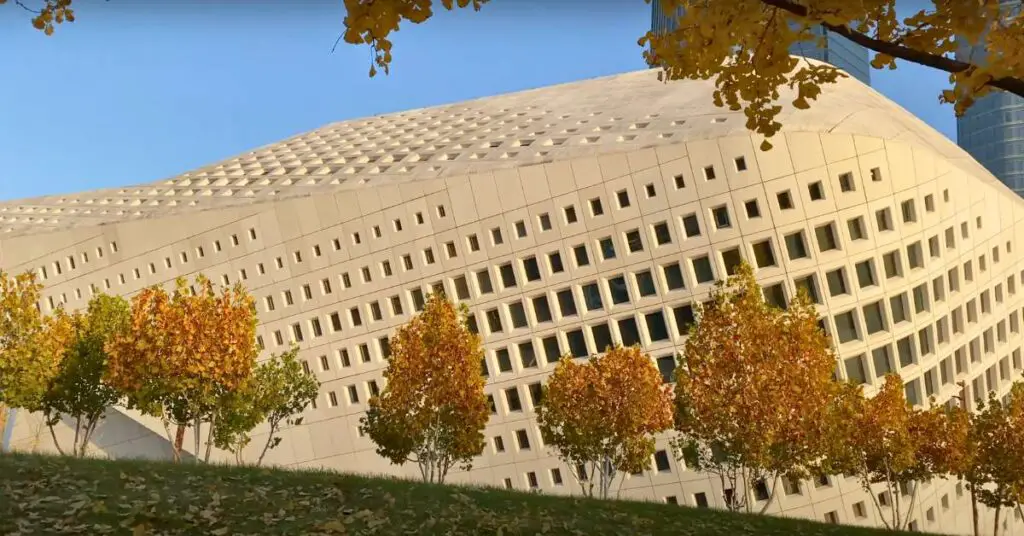
As spring breathes new life into Nanjing, the area surrounding these architectural icons bursts into color. The trees don fresh coats of green, pink, and white, their blossoms adding a delicate contrast to the modern structures. From the drone’s perspective, the juxtaposition of cutting-edge architecture against the backdrop of blooming nature paints a picture of serene coexistence between human innovation and the natural world.
The Pulse of Nanjing’s Business District
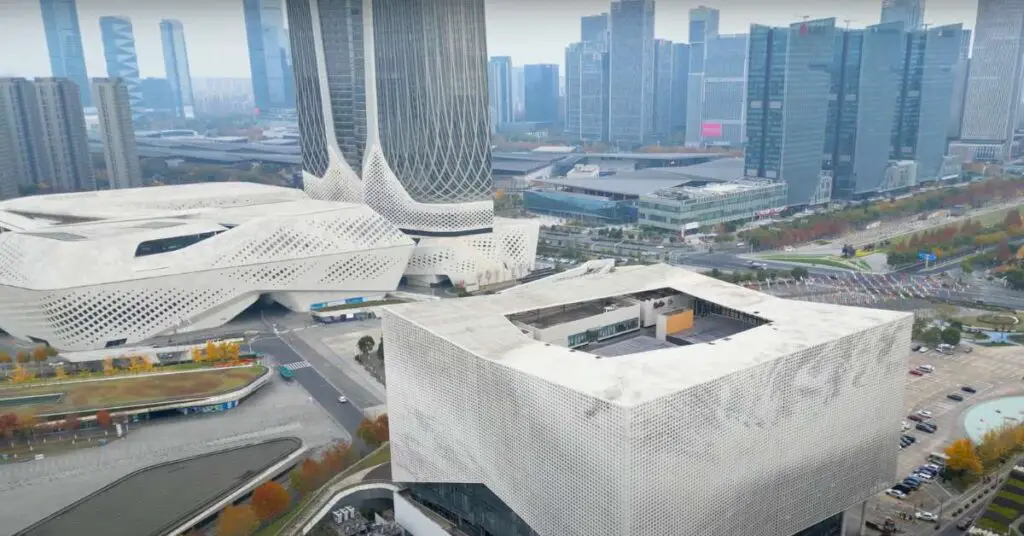
Just a short distance away lies Nanjing’s bustling business district, a testament to the city’s rapid development and economic vitality. Skyscrapers pierce the sky, their glass facades reflecting the ever-changing hues of the day. The district is a hive of activity, embodying the dynamic spirit of modern Nanjing.
Youth Olympic Village: A Legacy of Excellence
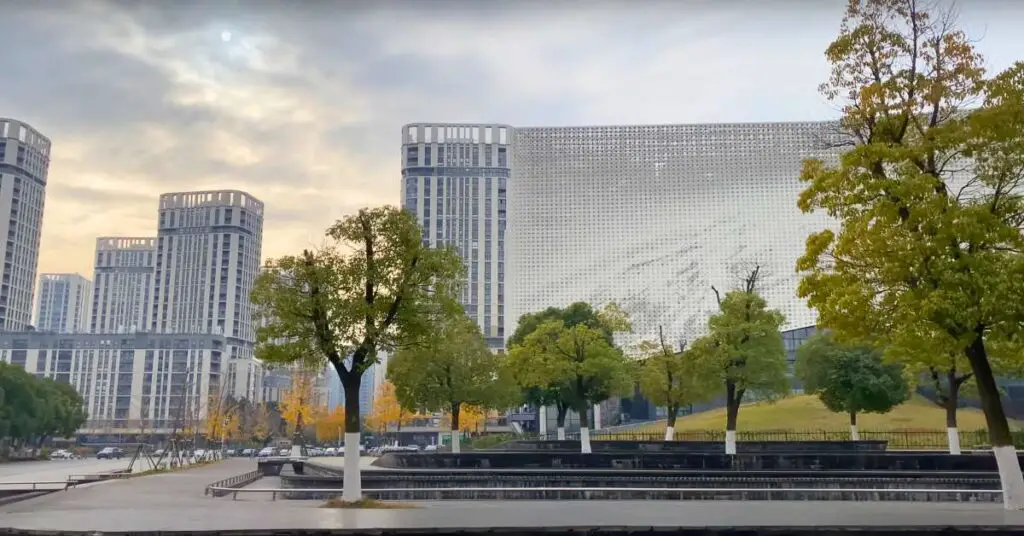
Nearby, the Youth Olympic Village stands as a legacy of the 2014 Youth Olympic Games. The village comprises residential buildings and facilities that once housed young athletes from around the globe. Today, it serves as a vibrant community, its modern housing complexes and public spaces continuing to foster a spirit of international unity and youthful energy.
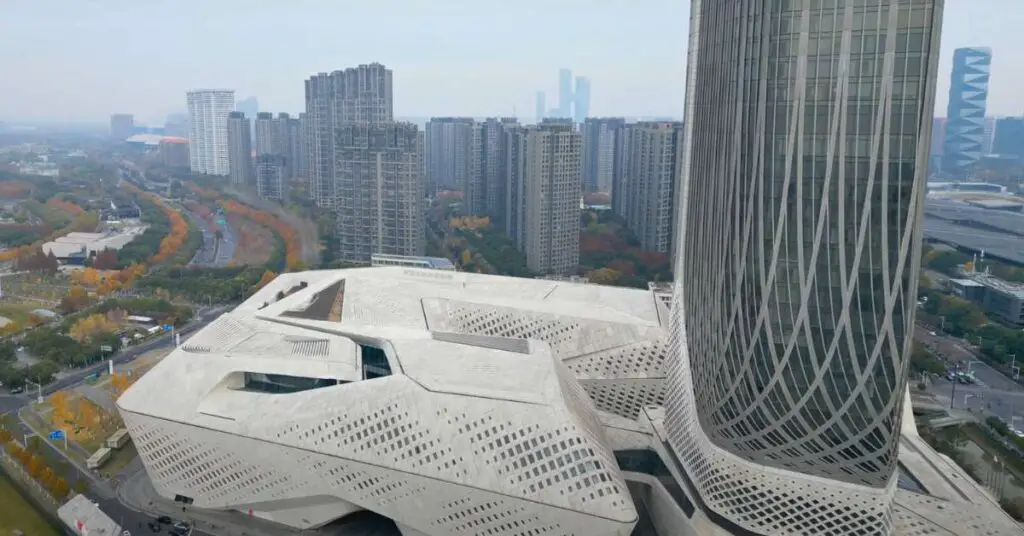
Capturing these scenes from above, it’s evident how Nanjing seamlessly weaves together threads of history, culture, nature, and modernity.
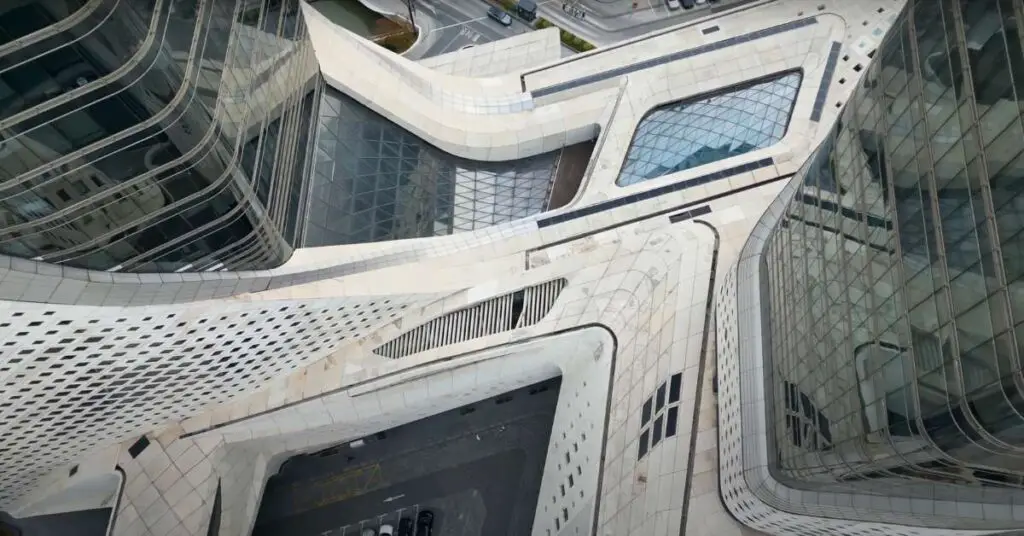
The Jumeirah Nanjing Hotel and Poly Grand Theatre are not just architectural feats; they are symbols of a city embracing the future while honoring its rich past.
My Experience Filming and Visiting Here
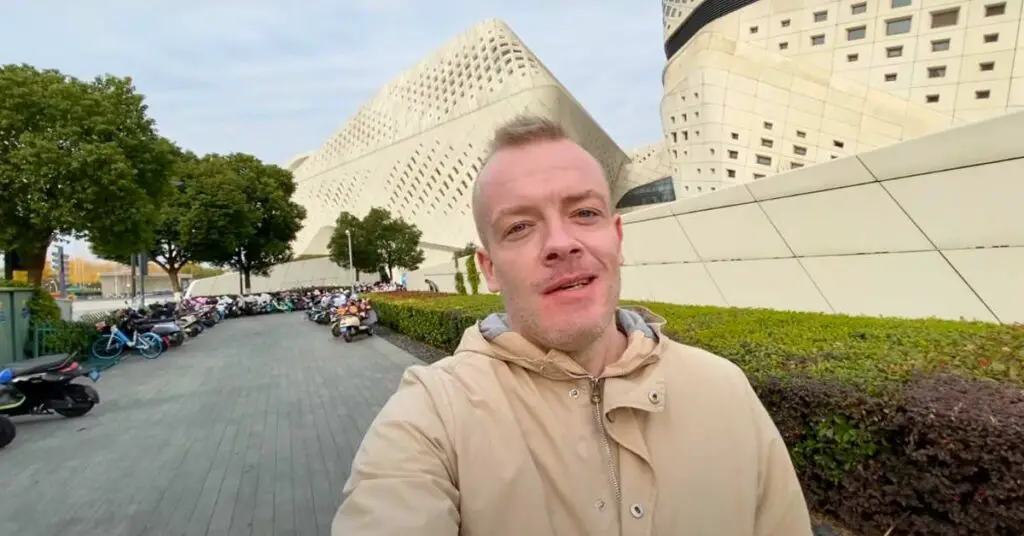
Having lived near the Jumeirah Nanjing Hotel for over four years, I had the privilege of seeing this architectural masterpiece on an almost daily basis. Its striking design never lost its impact, whether viewed up close or from a distance.
One of the most popular spots in the area lies at the heart of the complex, nestled between the hotel’s twin towers and the adjacent Poly Grand Theatre. Here, visitors often gather to pose for photos, surrounded by the sweeping curves and futuristic elegance of these incredible structures. The nearby Nanjing Eye Bridge perfectly complements the scene, adding to the modern aesthetic of the skyline. At night, the entire area transforms as the buildings illuminate, creating a stunning visual spectacle that feels straight out of a sci-fi movie.
Capturing this on camera, however, required some creative maneuvering. Due to China’s 120-meter drone altitude limit—similar to most other countries—I had to pull back quite a bit to fit the entire vertical structure into the frame. In some shots, I had to tilt the drone upward to fully showcase the immense scale of the towers. You can see this in the final moments of the video I created, where I capture the top s of the towers and sky.
Filming here was an unforgettable experience—an opportunity to document one of Nanjing’s most striking architectural achievements from a perspective few get to see.
Who designed this building – Zaha Hadid Architects
Zaha Hadid Architects (ZHA), founded by the late Dame Zaha Hadid, is renowned for its revolutionary contributions to contemporary architecture. The firm’s designs are characterized by futuristic aesthetics, fluid forms, and dynamic geometries that challenge traditional architectural conventions.
One of ZHA’s hallmark design philosophies is the use of curvilinear shapes and sweeping lines, creating structures that appear to be in constant motion. This approach is evident in projects like the Guangzhou Opera House in China, where the building’s exterior resembles two smooth, asymmetrical boulders, earning it the nickname “double pebble.” The interior continues this theme with a fluid and seamless design, enhancing the sense of movement and dynamism.
Another iconic project is the London Aquatics Centre, designed for the 2012 Summer Olympics. Inspired by the fluid geometry of water in motion, the structure features a wave-like roof that undulates gracefully, embodying the concept of fluidity both in form and function. The building’s design not only serves aesthetic purposes but also enhances the spectator experience, with its sweeping curves providing clear sightlines to the pools below.
ZHA’s innovative approach extends to cultural institutions as well. The MAXXI Museum in Rome, dedicated to 21st-century arts, showcases the firm’s signature style with its bending oblong tubes that overlap and intersect, creating a sense of flow and movement. The design blurs the boundaries between interior and exterior spaces, inviting visitors to explore the museum in a continuous, fluid journey.
In the realm of urban infrastructure, the Sheikh Zayed Bridge in Abu Dhabi exemplifies ZHA’s ability to infuse engineering projects with artistic expression. The bridge’s undulating arches and dynamic lighting design give the impression of movement, transforming a utilitarian structure into a landmark that resonates with the cultural context of its location.
ZHA’s commitment to pushing the boundaries of architecture is also evident in their unbuilt projects, which offer a glimpse into the firm’s visionary thinking. These designs, though never realized, showcase bold concepts that continue to inspire and influence the field of architecture.
The firm’s innovative spirit continues under the leadership of Patrik Schumacher, who has embraced advanced technologies such as generative AI to enhance the design process. This integration of technology allows ZHA to explore new forms and structures, maintaining its position at the forefront of architectural innovation.
In essence, Zaha Hadid Architects has redefined modern architecture through its avant-garde designs and visionary approach, leaving an indelible mark on skylines around the world.